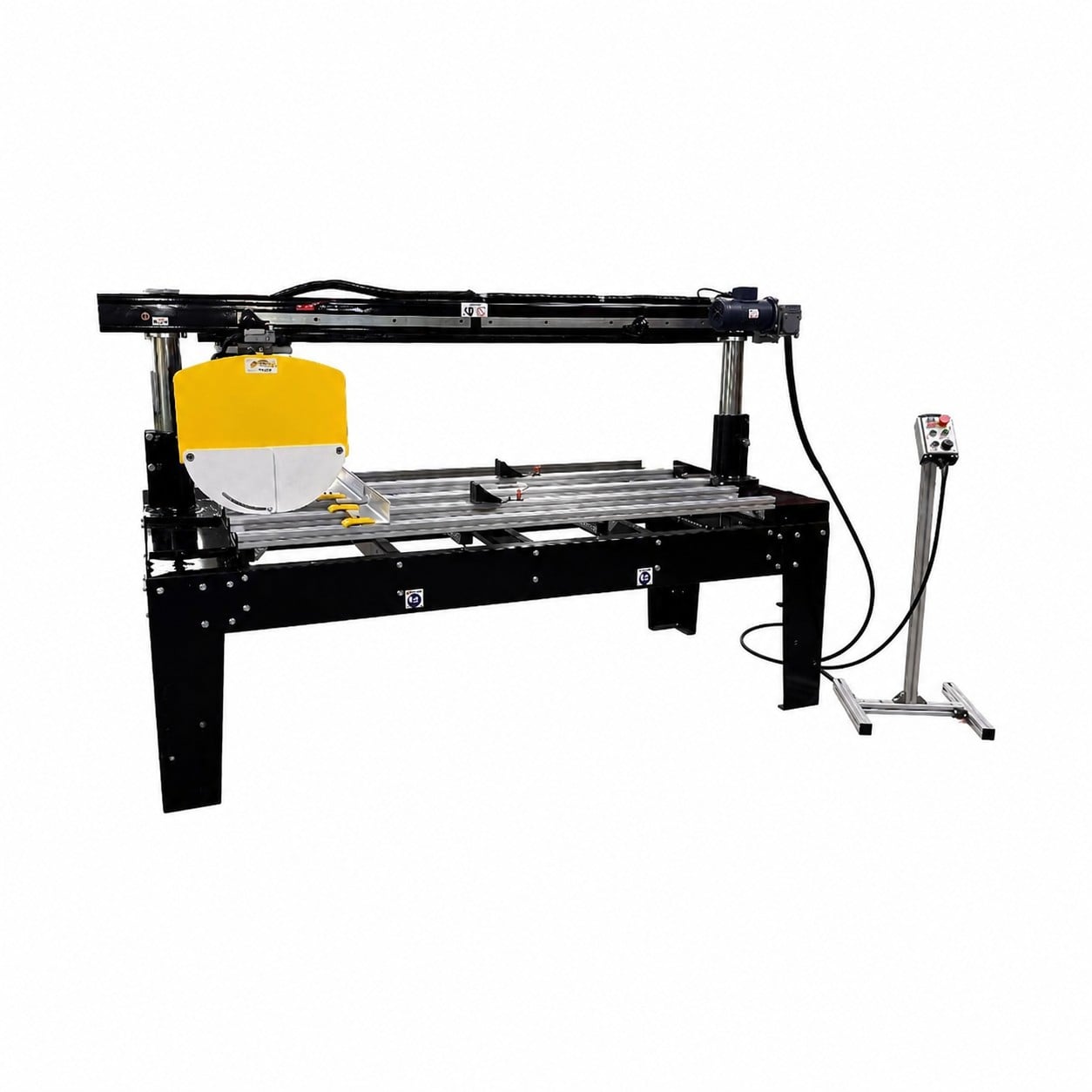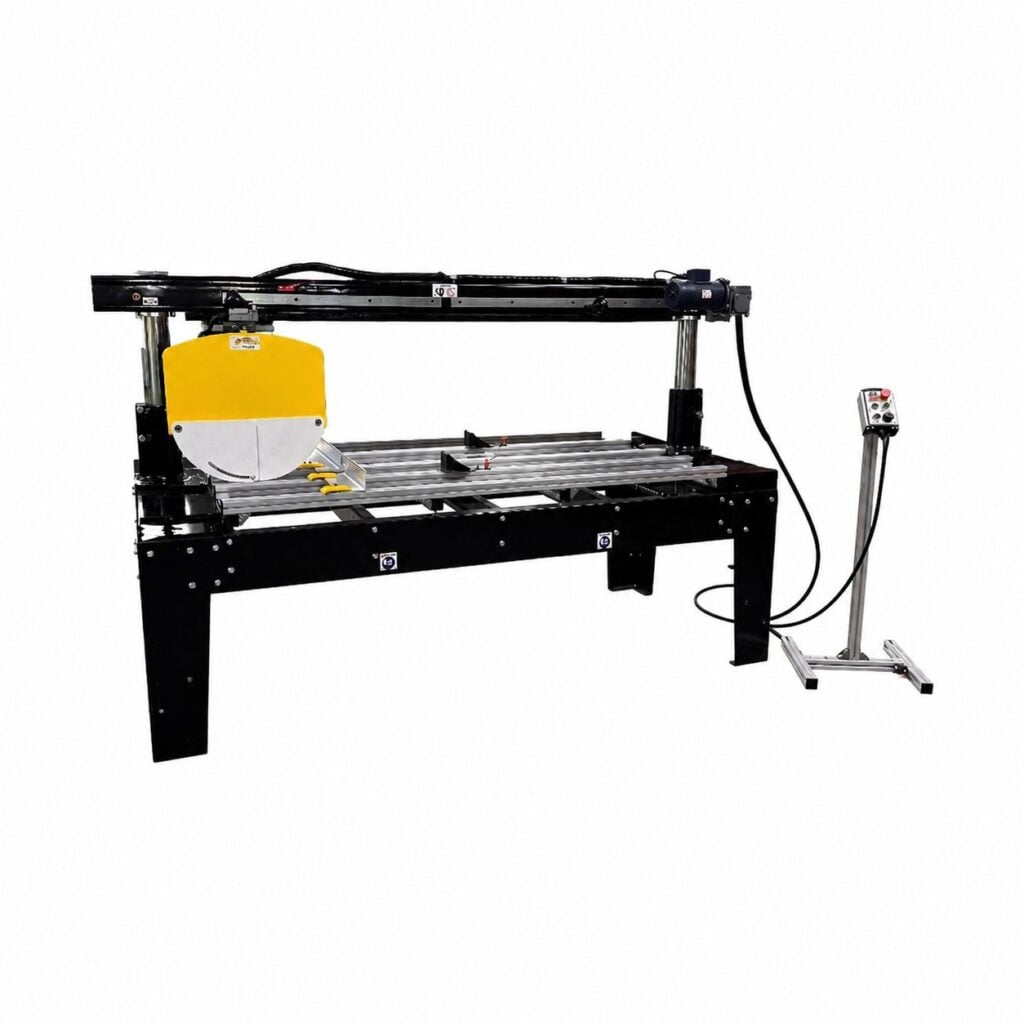
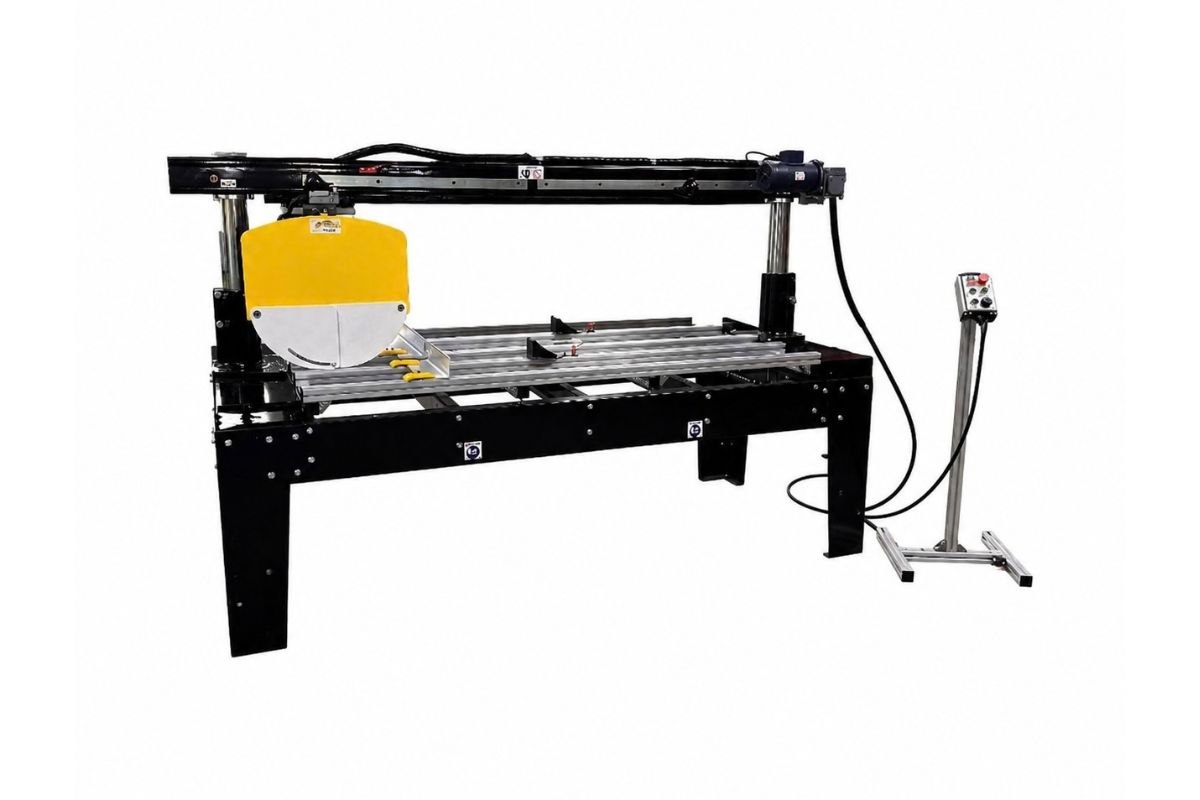
If your operation needs to make long, deep crosscuts in wood, aluminum, metal, composites, or other large materials, an industrial Beam Saw may be the right solution. Choosing the right machine requires more than simply selecting a blade size.
Cutting capacity, material type, available power, production requirements, and optional equipment can all affect which Beam Saw is best for your application.
Before investing in a Beam Saw, consider these five important factors.
Start with the material you need to cut.
Industrial Beam Saws can be used for applications involving wood, aluminum, brass, bronze, copper, fiberglass, lead sheets, plastics, steel, and other materials. They are commonly used in industries and applications such as window and door manufacturing, curtain wall production, metal roofing, metal decking, truss manufacturing, and other operations that require long, deep crosscuts.
The material itself is only part of the equation. Consider its thickness, width, shape, and how frequently it will be cut.
Some materials may also require a specific blade, blade speed, clamping method, or coolant system. Providing these details when selecting a saw helps determine the appropriate machine and setup for your application.
Not sure how your material will cut? Original Saw Company offers test cuts for applications where customers are uncertain about a particular material. Send us a sample, and our team can perform a test cut and provide a video so you can see the results before purchasing a machine.
The next consideration is the size of the material being cut.
Two measurements are particularly important:
Original Saw Company offers industrial Beam Saws with crosscut capacities up to 65½ inches and depths of cut up to 8 inches, depending on the model.
For example, a 16-inch Beam Saw provides greater crosscut capacity, while larger 20-inch and 22.5-inch blade models provide increased depth of cut.
Don’t choose a machine based only on the material you’re cutting today. Consider whether your material sizes or applications could change in the future. Selecting adequate capacity now can give your operation greater flexibility as production needs evolve.
It’s also important to understand the types of cuts the machine can perform. Original Saw Beam Saws are designed for straight crosscuts and bevel cuts and can also be configured for dado cutting. They are not designed for rip cuts, miter cuts, or compound miter cuts.
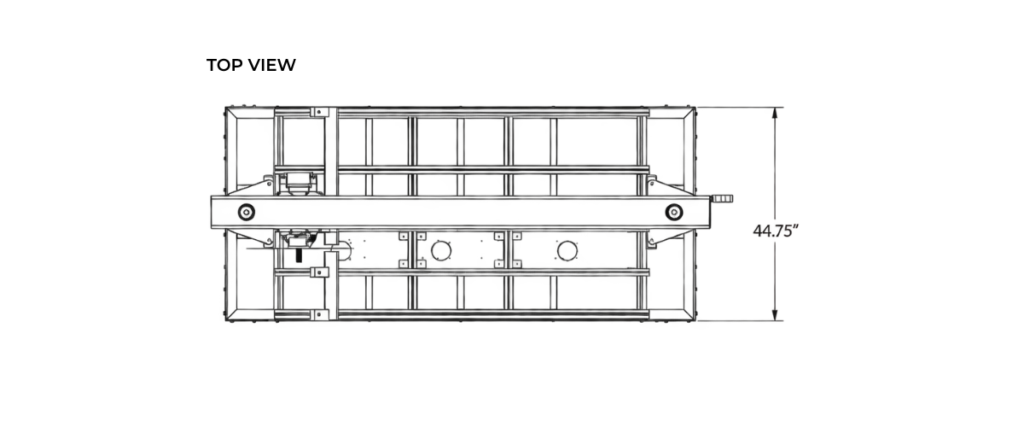
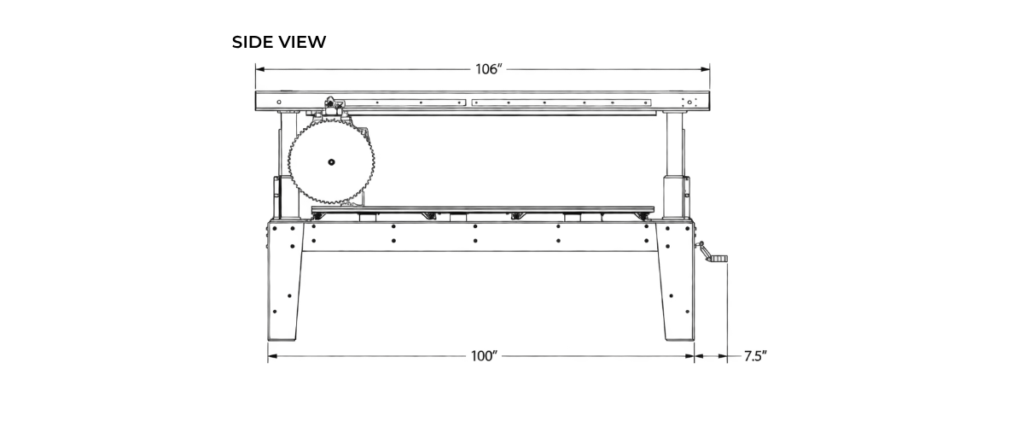
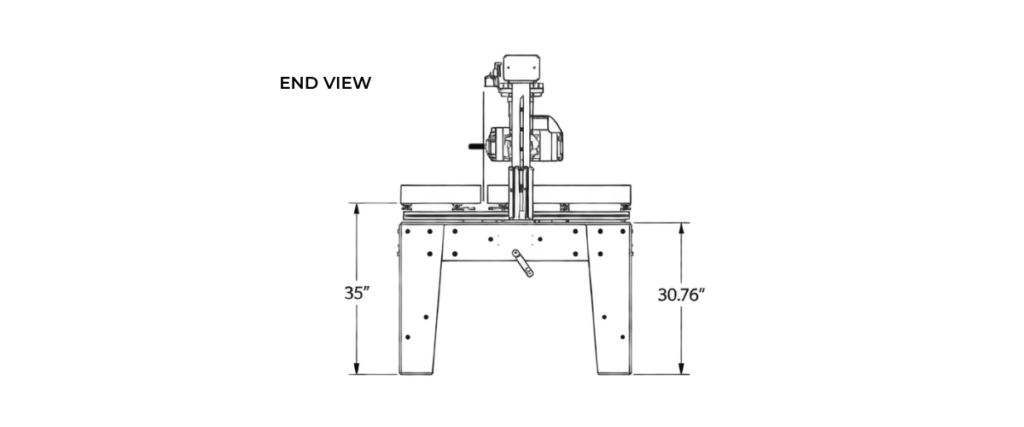
Before purchasing industrial machinery, confirm the electrical service available in your facility.
Original Saw Beam Saws are available in single-phase and three-phase configurations, with available voltage depending on the model. Current Beam Saw models use heavy-duty TEFC (Totally Enclosed Fan-Cooled) motors designed for industrial environments.
Variable Frequency Drive (VFD) technology provides controlled operation and helps deliver smooth starts and consistent performance.
Your production requirements are equally important.
Ask:
Original Saw Beam Saws are designed for demanding industrial applications and are capable of operating in facilities running two to three shifts per day.
Understanding your production needs can also help determine whether a manually operated saw is sufficient or whether additional features could improve your workflow.
The right accessories can turn a Beam Saw into a cutting station designed specifically around your production process.
Several options are available depending on the application.
An Electronic Powered Cross Feed moves the saw carriage through the cut electronically rather than requiring the operator to manually pull the saw through the material. This can be especially useful for repetitive cutting applications and higher-production environments.
When combined with other options, powered cross feed can help create a semi-automatic cutting process.
A Pneumatic Clamping System helps securely hold material during the cutting process. It can be especially beneficial when making repetitive cuts or working with materials where consistent positioning is important.
A Saw Measuring System allows operators to measure material directly at the cutting station. This can help improve repeatability, reduce the time spent manually measuring each cut, and reduce material waste.
Extension Tables provide additional support for long or heavy material entering or exiting the saw. Choosing the appropriate table configuration can make material handling easier and create a more complete cutting workstation.
Depending on the material being cut, dust collection or a mist coolant system may also be appropriate. These options should be considered as part of the complete cutting application rather than after the machine has been selected.
When evaluating accessories, consider which features could reduce material handling, improve repeatability, or make your production process more efficient.
An industrial Beam Saw is a significant equipment investment, so purchase price shouldn’t be the only consideration.
Think about how the machine could affect:
Optional equipment such as powered cross feed, pneumatic clamping, measuring systems, and extension tables may increase the initial investment but can provide additional value in applications involving repetitive or high-volume cutting.
The goal is to select a Beam Saw that meets your current cutting requirements while providing the productivity and capacity your operation will need over the long term.
Before selecting a Beam Saw, gather as much information as possible about your application. At a minimum, you should know:
These details make it much easier to compare models and determine which features are worth adding to your cutting station.
Videos and product demonstrations can also help you understand how different Beam Saw configurations operate before making a purchase.
When evaluating an industrial saw, workplace safety and proper machine guarding should also be part of the purchasing and operating process. OSHA provides additional guidance on machine guarding and saw safety.
An industrial Beam Saw is used to make long, deep crosscuts in large or thick materials. Applications can include wood products, aluminum extrusions, window and door components, curtain wall, metal roofing, metal decking, plastics, composites, and other industrial materials.
Depending on the blade and machine setup, Original Saw Beam Saws can cut materials including wood, aluminum, brass, bronze, copper, fiberglass, lead sheets, plastics, and steel.
Original Saw Beam Saws provide maximum crosscut capacities of up to 65½ inches, depending on the model.
The maximum depth of cut varies by model. Original Saw Beam Saws provide cutting depths of up to 8 inches.
Yes. Original Saw industrial Beam Saws can make straight crosscuts and bevel cuts. Maximum cutting depth is reduced when making a 45-degree bevel cut.
No. Original Saw Beam Saws are designed for crosscuts and bevel cuts and are not intended for miter, compound miter, or rip cutting.
An Electronic Powered Cross Feed can be added to move the saw carriage electronically through the cut. When combined with options such as Pneumatic Clamping, it can reduce manual operation and create a more efficient cutting process for repetitive applications.
Every cutting application is different. Material type, dimensions, production volume, available power, and desired automation all play a role in choosing the right equipment.
Original Saw Company’s team can help evaluate your application and determine the Beam Saw, blade, and optional equipment that best fit your cutting requirements.
If you’re unsure whether a Beam Saw will successfully cut a particular material, ask about sending us a sample for a test cut. We’ll cut the material on our equipment and provide a video so you can review the results.