Mass timber construction is quickly becoming one of the fastest growing shifts in the building industry. It’s influencing far more than large-scale projects, changing how buildings are designed, manufactured, and assembled. From sustainability to faster build times, mass timber is reshaping how construction gets done.
To better understand this shift, Dave Brown, Industrial Sales Manager at Original Saw Company, attended the International Mass Timber Conference in Portland, Oregon. His goal was to see how the industry is evolving and where Original Saw Company’s customers and equipment fit within it.
While much of the mass timber conversation focuses on manufacturing, Original Saw Company supports the stages before and after production, where materials need to be cut, trimmed, and prepared.
Mass timber is a category of engineered wood products designed for structural applications in buildings. These materials are manufactured by bonding layers of wood together to create large, high-strength panels and beams used in walls, floors, and structural systems.
Mass timber differs from traditional lumber. Traditional lumber uses individual boards, but mass timber products are manufactured by bonding multiple layers of wood together to create large panels and beams. In products such as cross-laminated timber (CLT), these layers are stacked in alternating directions to improve strength, stability, and load-bearing performance.
Common types of mass timber include:
These materials are typically produced off-site and delivered ready for installation. This process helps streamline construction and reduce time on the jobsite.
What makes mass timber unique is its ability to combine structural performance, sustainability, and speed of construction in a way that traditional materials often cannot.
In this short video from IWF Atlanta, industry expert Ethan Abramson explains what mass timber is and why it’s gaining so much attention.
As highlighted in the video, over 2,500 mass timber projects are underway across the United States, stressing how quickly this segment is expanding.
As mass timber construction continues to grow, understanding how these materials are produced and used is critical for anyone involved in building, fabrication, or jobsite work.
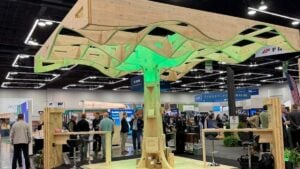
Interest in mass timber construction has increased across the construction industry for several key reasons.
Wood is a renewable resource that naturally stores carbon across its lifecycle. Compared with traditional materials like steel and concrete, mass timber can reduce a building’s overall carbon footprint. This makes mass timber a preferred option while sustainability becomes a higher priority across the industry.
Mass timber components are typically prefabricated off-site and delivered ready to install. This allows projects to move quickly once materials arrive, often reducing construction timelines from weeks to days.
With more work happening off-site, fewer skilled laborers are required on the jobsite. In an industry facing ongoing labor shortages, the shift toward prefabrication improves efficiency and reduces dependence on large crews.
Mass timber offers both structural performance and visual appeal. Exposed wood interiors are increasingly popular in modern architecture, providing a natural, warm aesthetic. At the same time, engineered wood products allow for large spans and innovative designs.
As a result mass timber construction is being used in a growing range of applications:
Mass timber is also gaining interest in defense and emergency response sectors, particularly for quick-deployable structures.
Military and emergency response teams are exploring its use for rapidly assembled buildings, including temporary or semi-permanent housing and forward operating facilities. Its fast installation, lighter logistics footprint, and sustainability advantages make it a practical option for these types of applications.
Mass timber construction isn’t just a concept. It is already being used in large-scale, high-visibility projects.


One example is Portland International Airport, which features an extensive mass timber roof structure. The project highlights the structural capabilities and architectural appeal of mass timber.
Projects like this demonstrate how mass timber is moving into mainstream construction, particularly in commercial and public spaces.
As mass timber use expands, it’s creating new demands for how materials are handled, modified, and installed, especially outside of controlled manufacturing environments.
Industry professionals are coming together to better understand how mass timber is evolving and where it’s headed next.
As interest in mass timber construction continues to grow, so do misconceptions about what it is and what it isn’t.
Mass timber is not traditional stick framing. Instead of assembling structures piece by piece using dimensional lumber, it relies on large, engineered components designed to work as part of a coordinated structural system.
It’s not simply “larger pieces of wood.” Products like CLT and glulam are highly engineered materials, designed with specific strength and performance characteristics.
And while mass timber can improve efficiency, it’s not always the lowest-cost option. In many cases, the value comes from reduced labor, faster timelines, and overall efficiency.
Finally, mass timber is still a developing industry. Availability, building codes, and contractor experience can vary by region, making it important to understand local conditions before adopting it.
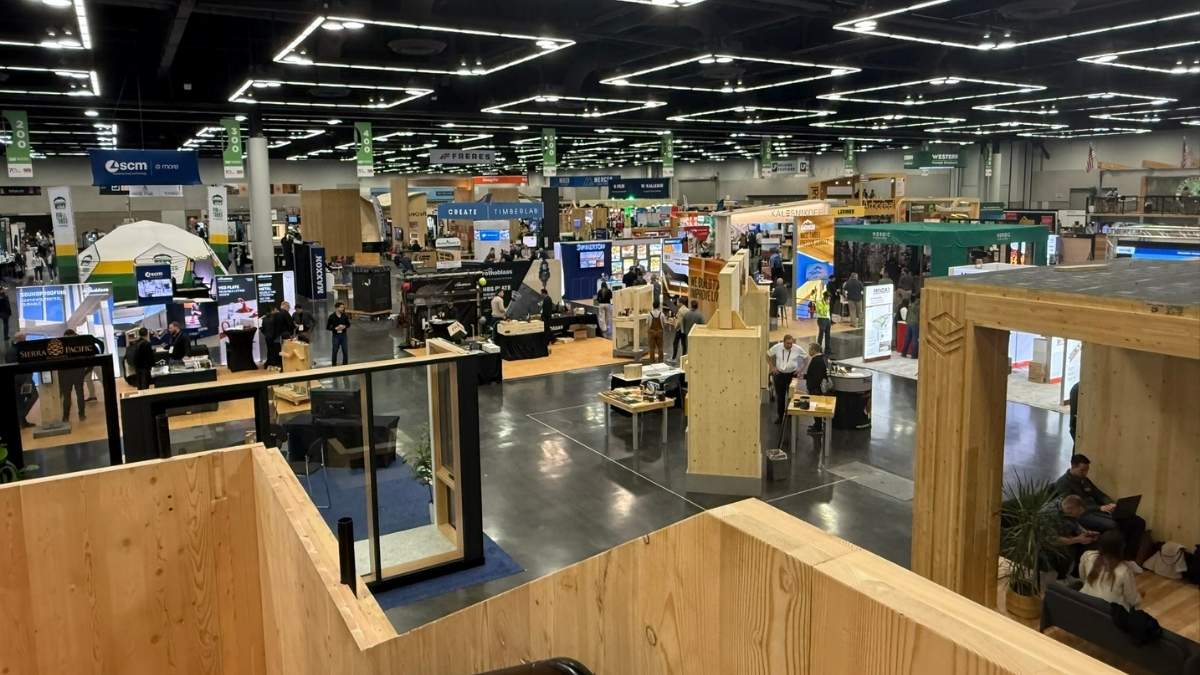
The International Mass Timber Conference brings together professionals from across the industry, including manufacturers, architects, engineers, contractors, and developers.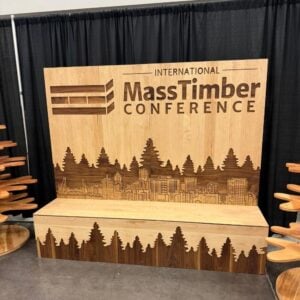
Dave Brown, Industrial Sales Manager at Original Saw Company, described the overall tone of the conference as a shift toward real momentum:
“It felt like an industry that has moved beyond ‘what if’ and ‘maybe’ enthusiasm and into serious commercial momentum. People weren’t asking if mass timber construction will grow, but how fast and what needs to be solved next.”
He also noted the level of attendees and the quality of discussions:
“Most attendees were directors, engineers, plant managers, and executives. The conversations were technical, focused, and centered around real projects.”
Demand is strong, with many manufacturers already operating at capacity.
“Manufacturers reported full order books, long lead times, and plans for expansion. In some regions, it’s growing even faster than expected.”
Much of the efficiency in mass timber construction comes from prefabrication.
“There’s a strong push toward prefabricated components and faster installation cycles. That’s where a lot of the efficiency gains are coming from.”
Despite its growth, challenges exist, particularly in supply and logistics.
“Lead times for CLT and glulam can be long, and transportation logistics are still a challenge in many areas.”
Despite increased automation, manual work is still a key part of the process.
“Most facilities are using a hybrid approach. They use automation for major processes, but manual work is still happening in staging, trimming, finishing, and jobsite adjustments.”
As the industry grows, many stakeholders are still learning how to work effectively with mass timber construction.
“Contractors and suppliers are still developing best practices, training, and safety standards. There’s a learning curve across the board.”
As the industry matures, greater alignment with established safety standards, such as OSHA regulations and ANSI guidelines, will be important for safe handling, cutting, and installation of mass timber components.
The momentum behind mass timber construction is now extending beyond specialized conferences into the broader woodworking industry.

At IWF Atlanta 2026, a new Mass Timber & Prefabrication Showcase will highlight the technologies and processes shaping this segment. This reflects a larger shift that brings together woodworking, construction, and off-site manufacturing in new ways.
For Original Saw Company, this shift directly corresponds with where our customers operate.
The opportunity extends beyond manufacturing and into what happens before and after production.
“Mass timber construction isn’t just about production, it’s about everything that happens around it. That includes handling, modifying, and making adjustments in the field. That’s where a lot of the real-world challenges and opportunities exist.”
We’re exhibiting because we see firsthand how this shift is impacting our customers.. As mass timber projects become more common, so does the need for precision cutting, flexibility, and adaptability.
As mass timber construction continues to grow, much of the focus remains on large-scale manufacturing and prefabrication. But just as important is what happens before and after those processes.
Mass timber isn’t replacing traditional woodworking; it’s expanding it.
Original Saw Company supports the stages where mass timber components need to be cut, trimmed, and prepared outside of fully automated production lines. This includes lumberyards, fabrication shops, and other facilities supporting mass timber projects.
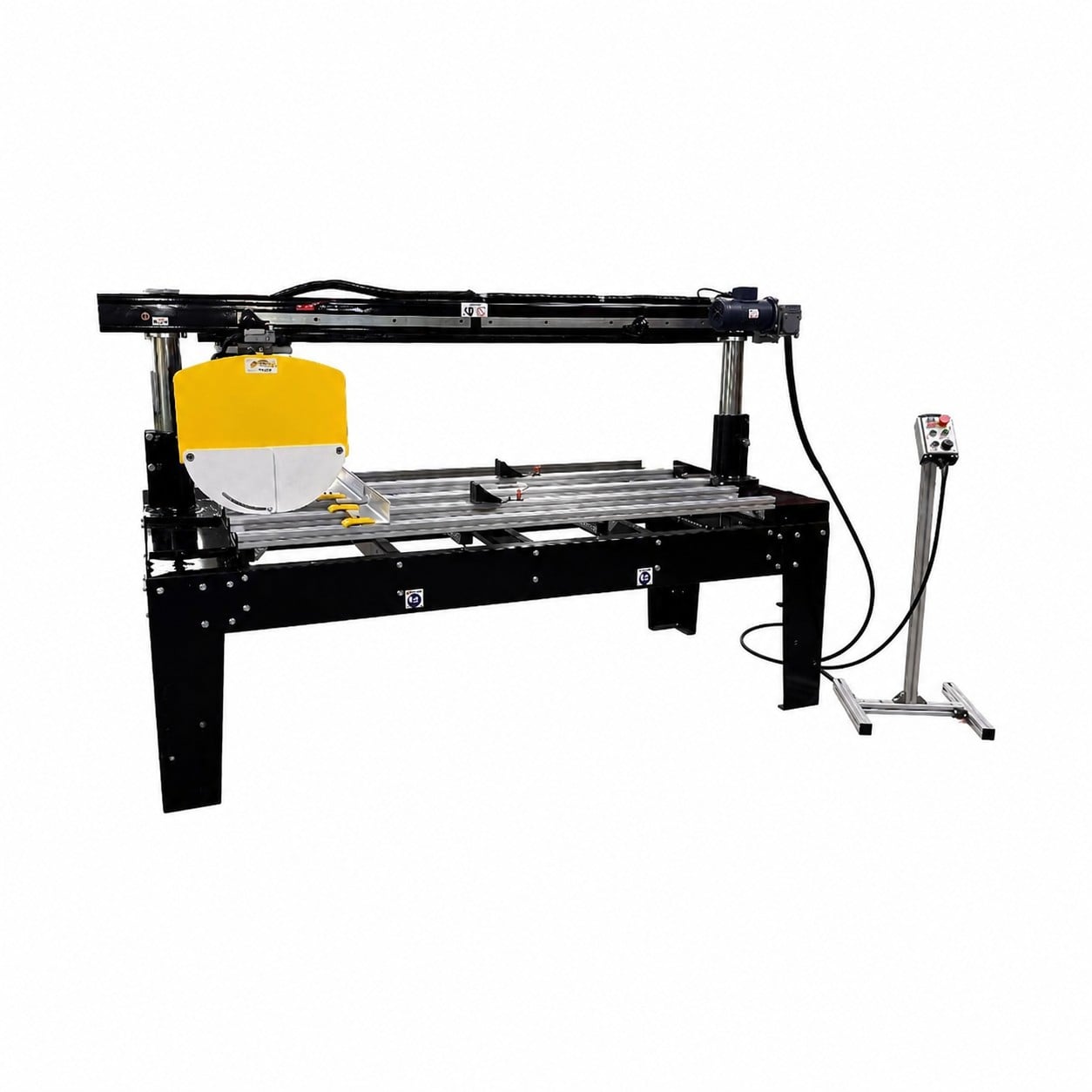
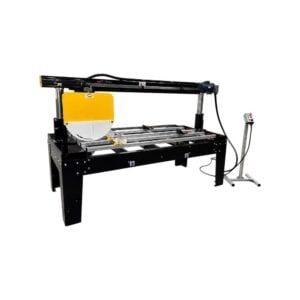
Equipment like our Beam Saws are designed to handle large panels and heavy materials.
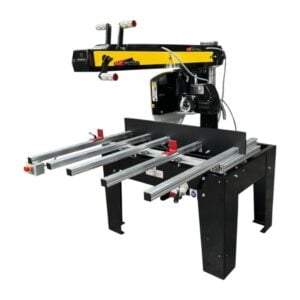
Our Super Duty Wood Cutting Radial Arm Saws provide accurate and repeatable crosscuts, making them well suited for these environments where durability and precision are essential.
Original Saw Company supports:
Our equipment is especially valuable in secondary processing, where full CNC automation isn’t always practical or necessary, but accuracy and consistency still matters.
“We see strong opportunities in secondary processing, jobsite cutting, and supporting smaller fabricators who aren’t ready for full CNC automation.”
Not every operation needs or can justify fully automated systems.
“There’s a real need for reliable, accurate cutting solutions that don’t require million-dollar investments.”
Understanding where we don’t fit is just as important.
Original Saw Company is not:
Instead, we support the process. Original Saw guarantees materials are cut accurately and efficiently when and where they’re needed.
Even if you’re not directly involved in mass timber construction, you may already be closer to it than you think.
As adoption grows, it’s influencing more parts of the supply chain. Not just manufacturers are affected, but the businesses that support projects before, during, and after installation.
Many existing customers, especially lumberyards and fabricators, may see increased demand for mass timber-related cutting services. This shift is creating new opportunities for shops that can adapt quickly.
Opportunities exist for:
Lumberyards are increasingly involved in sourcing, handling, and distributing materials that support mass timber projects. Even if they’re not stocking CLT panels directly, they may be supplying complementary materials or working with contractors who are.
Mass timber structures are often assembled on-site using prefabricated components. Contractors play a critical role in fitting, adjusting, and installing these large elements.
Fabricators may be asked to perform secondary processing, including trimming, cutting, or modifying components to meet specific project requirements. As designs become more complex, the need for accuracy and repeatability becomes even more important.
For woodworking shops, mass timber construction offers an opportunity to expand services. This could mean producing complementary components, assisting with project prep, or adapting to new materials and specifications.
There are still bottlenecks in secondary processing, and many companies rely on manual methods that can be slow or inconsistent. That’s a gap we’re well-positioned to help solve.
We’re excited to be part of the new Mass Timber & Prefabrication Showcase at IWF Atlanta 2026. This new area highlights woodworking, construction, and off-site building methods.
Register for IWF Atlanta 2026 here and visit us at our booth to see how your opeartion fits into mass timber. Whether you’re already working on mass timber construction projects or just starting to explore where you fit, this is an chance to see how your business can connect to this evolving space.
Mass timber is changing how buildings are designed and constructed, and it is also expanding opportunities across the woodworking industry.
It depends on coordination across multiple parts of the process.
“Mass timber construction succeeds only when the entire chain is aligned from design to fabrication to installation.”
For many companies, the opportunity isn’t about manufacturing mass timber; it is how it is processed, handled, and installed.
It is not about replacing what exists, but about expanding what’s possible.
And at Original Saw Company, we’re proud to help our customers navigate that shift.